Tinubu reportedly directs Wike to suspend impeachment efforts against Fubara at truce meeting on Rivers politics
By Edward Oluwarotimi

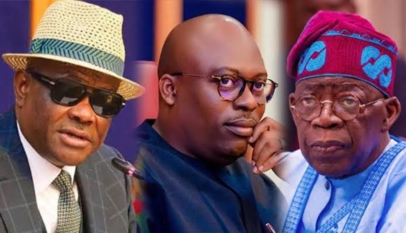
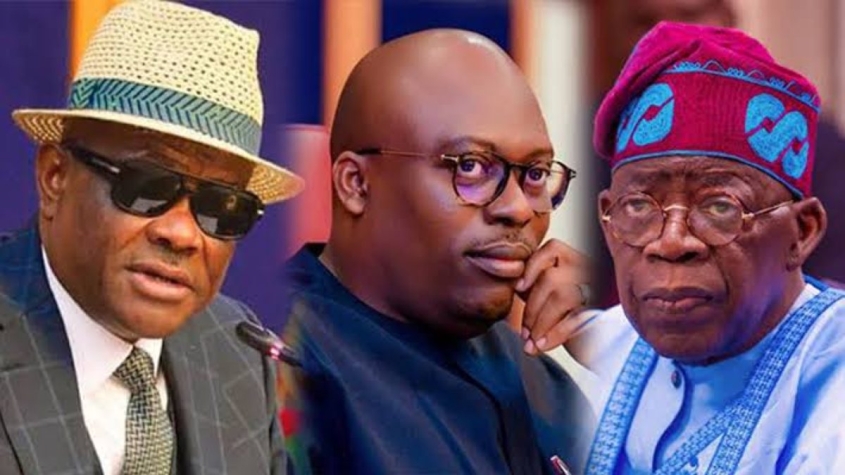
President Bola Ahmed Tinubu has reportedly intervened in the deepening political crisis in Rivers State, brokering a truce between Governor Siminalayi Fubara and Federal Capital Territory (FCT) Minister Nyesom Wike.
The move, according to reports, comes as tensions have paralyzed governance in Nigeria’s oil-rich state, threatening both political stability and economic activity.
According to sources, Tinubu directed Wike to suspend any impeachment efforts against Fubara by his loyalists in the Rivers State House of Assembly.
In turn, Fubara was also admonished to recognize Wike as the undisputed elder statesman of Rivers politics, irrespective of party affiliations.
The agreement, described by insiders as a “tough compromise,” aims to de-escalate hostilities and restore political order.
Key terms of the deal include the immediate suspension of all impeachment proceedings against Fubara, allowing the state government to operate without legislative disruption.
Fubara is also expected to defer to Wike on internal political matters, drawing parallels to Lagos, where governors maintain respect for predecessors like Babatunde Fashola.
For the upcoming Rivers State House of Assembly by-elections on February 21, 2026, in Ahoada East II and Khana II constituencies, candidates loyal to Wike are to be recognized by APC leadership.
Additionally, discussions regarding Fubara’s potential re-election in 2027 have been deferred as premature by the President.
The intervention reportedly occurred just before Tinubu’s official trip to Türkiye on January 26, 2026, with meetings possibly held abroad in locations such as France or Dubai, where Wike and Fubara were summoned separately.
This marks Tinubu’s second major attempt to resolve the Rivers crisis, following a failed peace accord in December 2023 that led to a six-month state of emergency in March 2025 and Fubara’s temporary suspension.
The roots of the conflict lie in Wike’s efforts to maintain influence in Rivers politics after handing power to his former protégé, Fubara.
Despite being a PDP member, Wike wields substantial sway over the state assembly, which is largely aligned with his faction.
Fubara’s push for autonomy has triggered repeated threats of impeachment, legislative gridlock, and concerns over oil production and security.
Wike has denied involvement in the latest impeachment attempts, emphasizing unity to support Tinubu’s 2027 re-election ambitions.
Reactions to the truce are mixed. Sources close to Wike view the agreement as a political victory reinforcing his dominance, though some APC leaders caution that his influence may undermine broader national interests.
Allies of Fubara argue that he cannot be controlled remotely from Abuja, yet the directive limits his options.
Observers suggest that a potential defection to the African Democratic Congress (ADC) could safeguard Fubara’s political future, though premature moves may trigger impeachment.
Public commentary has ranged from praise for Tinubu’s strategic handling of Rivers State to criticism that the deal hands over APC structures to a PDP-aligned Wike, raising concerns about executive autonomy and entrenched “godfatherism.”
While the truce could temporarily stabilize Rivers State, underlying tensions remain unresolved.
Its success hinges on both parties prioritizing governance over personal or factional grievances.
For President Tinubu, the balancing act is critical, given Rivers State’s strategic economic and electoral significance as Nigeria’s second-richest state.
Observers warn that failure to sustain the truce could reignite political instability, with potential ramifications for national security and oil revenues.