
Nigeria’s Banking Reset in 2025 – How First HoldCo’s Profit Shock Reflects Regulatory Discipline and Balance-Sheet Reform
By Adebamiwa Olugbenga Michael

Nigeria’s banking industry closed 2025 at a critical juncture shaped by macroeconomic adjustment, regulatory tightening, and renewed scrutiny of balance-sheet integrity.
Elevated interest rates, exchange-rate liberalisation, and the formal end of COVID-era regulatory forbearance combined to produce record headline profits across much of the sector. Yet beneath these aggregate gains lies a more complex story about risk recognition, governance discipline, and long-term financial stability.
First HoldCo Plc, the parent company of First Bank of Nigeria, emerged as the sector’s most striking exception, reporting a profit after tax (PAT) of ₦44.98 billion, a 93 percent decline from the prior year, prompting debate about performance, prudence, and policy intent.
At first glance, the contrast is clear. While peers within the so-called tier-1 or FUGAZ group, Access Holdings, Zenith Bank, GTCO, and UBA posted full-year 2025 profits running into several hundreds of billions of naira, First HoldCo’s bottom line shrank dramatically. The primary driver was a deliberate ₦748 billion write down charge taken against legacy non-performing loans (NPLs). Importantly, this decision did not reflect a collapse in core banking operations, gross earnings grew modestly, and net interest income benefited from the high-rate environment, consistent with sector-wide trends.
The asset write off must be understood within the Central Bank of Nigeria’s post-forbearance framework. Following the withdrawal of pandemic-era relief measures, banks were required to reclassify and fully provision stressed exposures that had previously been restructured or temporarily shielded. Industry data suggest that the sector’s NPL ratio rose toward 7 percent in 2025, above the 5 percent prudential threshold, driven largely by oil and gas, manufacturing, and foreign-currency-linked credits affected by naira depreciation. In this context, First HoldCo’s approach represented an accelerated recognition of losses rather than a unique exposure to risk.
Beyond macro stress, governance considerations have been central to regulatory attention. The CBN issued explicit directives in early 2025 requiring banks to unwind excessive insider-related exposures and strengthen credit governance, with enforcement tools ranging from sanctions to board-level interventions. While no institution operates in isolation from these systemic risks, First HoldCo’s large one-off provisioning, reportedly encompassing legacy and potentially insider-linked loans sent a clear institutional signal, unresolved governance weaknesses would be confronted directly rather than deferred. By contrast, several peers managed loan cleanup more gradually, supported by higher provisioning coverage ratios and diversified earnings streams.
The stronger reported profits of other tier-1 banks do not necessarily imply superior asset quality alone. Elevated yields on government securities, widening interest margins, treasury revaluation gains, and rapid growth in digital and payments income materially boosted earnings across the industry. Pan-African diversification, particularly for banks with significant non-Nigerian operations, also provided currency and revenue hedges. These factors allowed many institutions to absorb rising impairments without materially depressing net profits, even as cumulative sector provisions ran into the trillions of naira.
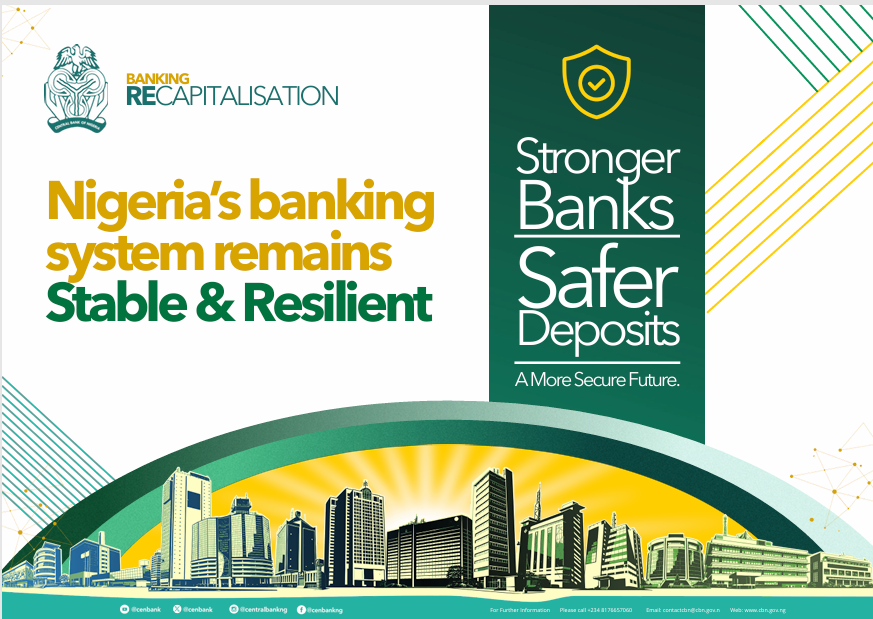
From a public policy and financial-stability perspective, the divergence between First HoldCo and its peers reflects differences in timing and strategy rather than fundamentally different operating environments. An aggressive balance-sheet reset produces short-term earnings pain but can improve capital transparency, investor confidence, and regulatory alignment over the medium term. Alternatively, smoother profit trend may coexist with residual asset-quality risks that will need to be addressed as recapitalisation requirements tighten under the CBN’s ongoing reform agenda.
As Nigeria’s banking system enters 2026, the key lesson is that headline profitability alone is an incomplete measure of institutional health. Transparent loss recognition, robust governance, and credible capital planning are increasingly central to regulatory trust and market valuation. First HoldCo’s 2025 results illustrate the costs, and potential long-term benefits of confronting legacy risks decisively. For policymakers, investors, and the public, the broader implication is clear, sustainable banking performance in Nigeria will depend less on temporary gains and more on disciplined institutions capable of aligning profitability with prudence in a more demanding regulatory era.